
Restricted Activity
Since the transposition of MIFID I in 2007, financial advisory has been a restricted and regulated activity. It requires prior authorization to operate and falls under the supervision of the CNMV (Spanish National Securities Market Commision); therefore, it is a service limited to those specifically authorized to provide it.
Only banks that include this activity in their program of operations and Investment Service Providers may engage in this activity. These providers include: Broker-Dealers , Brokers , Portfolio Management Companies and Financial Advisory Firms or "EAFN", the acronym in spanish for "Empresas de Asesoria Financiera Nacional".
The latter was created under MIFID I , originally as "EAFI" and is characterized by having a single restricted activity: financial advisory services. This is defined as the professional and remunerated provision of personalized recommendations to a client regarding financial instruments.
On April 30, 2009, the first "EAF" firm was officially registered at Spain.
With the arrival of MIFID II, in 2018, the nomenclature was updated form "EAFI" to "EAF".
Finally, the 2023 Securities Market and Investment Servicies Act or "LMVSI" (spanish acronym) introduced a new firm category: National Financial Advisory Firm or "EAFN" the spanish acronym for "Empresa de Asesoría Financiera Nacional"

Mutual Fund Managers are the companies responsible for asset management, including the selection, purchase, and sale of assets.
Banks are the companies who distribute the investment funds.
Mutual Fund Managers are the factory.
Banks are the commercial entity.
The mutual fund is the product.
The investment Fund Management Company receives a fee.
This is an implicit fee because it is automatically deducted from the Net Asset Value (NAV) of the shares.
You will always see the performance net of this fee.
The management fund company returns a percentage of this fee to the bank as payment for its sales services; this is known as a retrocession or rebate.
The problem is that only 30% of retail investors are aware of the impact these fees have on the final return of their investments.
In other words, 70% of retail investors are unaware of the meaning and the impact of retrocessions on their investments.
This automatic settlement mechanism creates an ilusion of zero costs.
Data: In 2015, the retrocession rate was around 64%, currently, it represents approximately 50%.
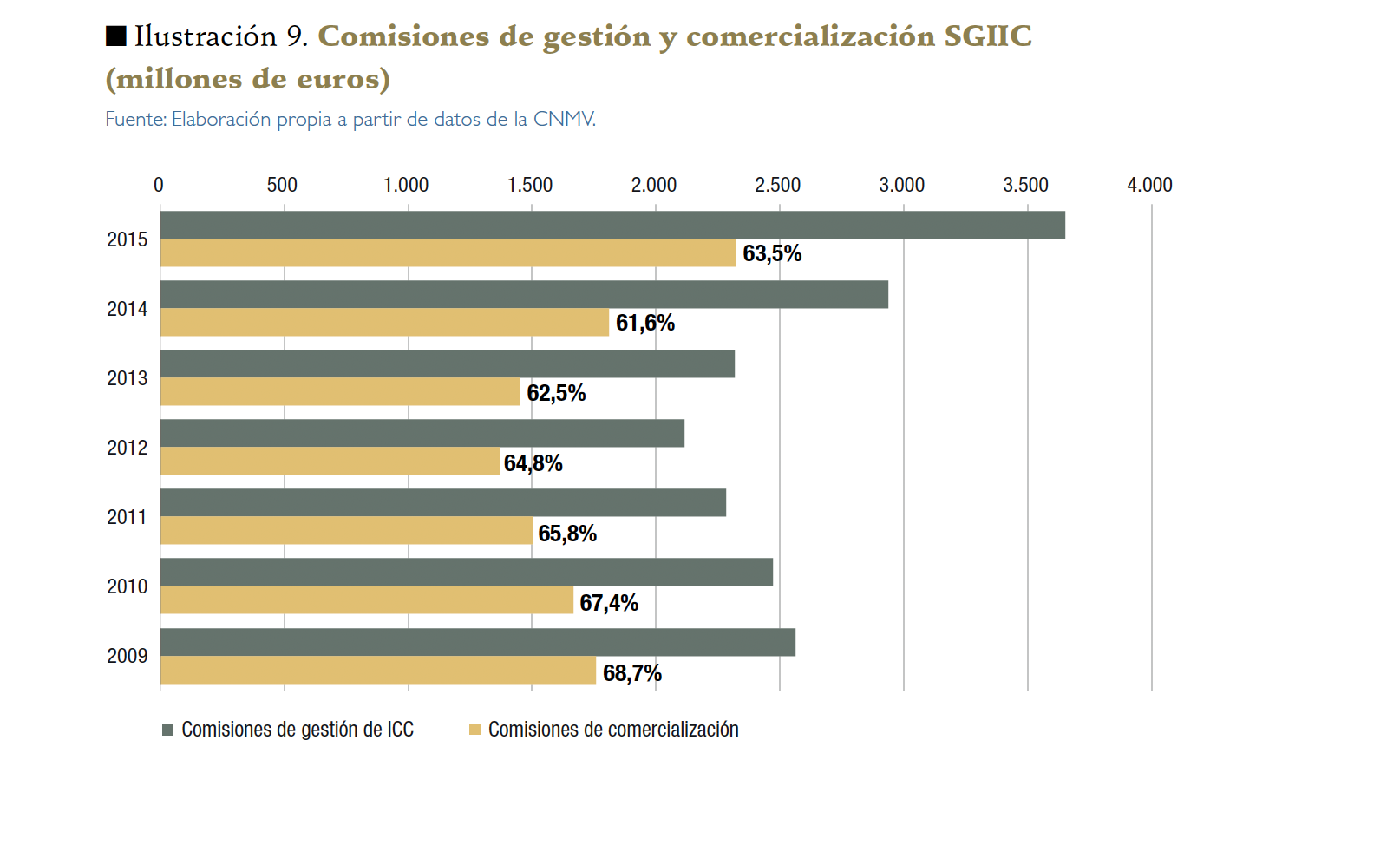
Retrocessions create conflicts of interest in fund distribution.
Fund Management Companies deduct their fee from your fund.
Banks charge to Fund Management Companies for marketing those funds.
This is the dependent financial advisory model.
The dependent financial advisory provides a service.
The Fund Management Company charges the investor for that service and, in turn, compensates the financial advisor.
Dependent financial advisors work under two kind of relationships for a bank : as an employment or as self-employed worker. They recommend mutual funds that normally are issued for an Investment Fund Manager belonging to the same corporate group.
As a corporate group, it is logical to assume their primary interest lies with their shareholders and owners.
In contrast, an independent financial advisor provides a service for which you pay an explicit fee.
An independent financial advisor works for you not for bank.
Clean share classes are fund classes that do not include retrocessions for the distributor, making them significantly cheaper than conventional fund classes.
The average savings when switching from a conventional class to a clean class is around 30% (Source. Fund People, 05.23.23 " How much an investor can save by investing in clean classes")
The evolution of fund distribution in Spain
Before MIFID (2008), Banks distributed funds through their branches as a simple sales or product placement activity. They used closed architecture, offering only funds from their own group´s manager fund company, which limited the client´s access to the rest of the market.
With MIFID II (2018), the model shifted, while the number of brandches and salaried staff decreased, the network of agents providing non-independent advice grew. But the flow of retrocessions continued. A guided architecture was introduced, including more third-party funds but still with limitations. In many cases, the fine print still mandates that 60% or more of the portfolio consist of the bank´s own funds.
This is a limitation and a conflict of interest
Limitation because of a restricted range of fund options.
Conflict of interest because the financial advisor recommends a product without considering if it is the best option for the retail investor in terms of cost, but rather because it yields the highest retrocession for the advisor.
In my opinion, this conflict doesn´t exist with an independent financial advisor. They are not limited in their product selection; they can choose the optimal fund and are fully aligned with investor´s interests because the advisor work for the investor rather than a bank.
There is no conflict - only transparency. The investor hires and pays for the service directly, and the advisor works solely in the investor favor.
your assets are your responsability
hire an independent financial advisor, a professiona